US Building Policy in the Age of Passive House
The Passive House Networkhas been actively seeding big policy moves across the nation since 2015, and the fruits of that labor are now ripening. This report-back from the 2026 ACEEE Summer Study, where PHN’s members were actively represented by Policy Director, Bronwyn Barry, covers a few highlights.
The Passive House Track
Mass DOER’s Ian Finlayson led and landed a Trojan horse full of Passive House and PH-adjacent sessions, ably co-hosted by Katie Ackerly. These presentations outlined substantial Passive House progress and revealed where Passive House principles are finally seeping into baseline code. Notable among them—thermal bridge calculations, which are now being incorporated into ASHRAE 90.1 for the first time, albeit in standard details as an on-ramping bridge.
Passive House Accelerator’s Zack Semke’s presentation outlined the Falcon Curve produced by residential building winter peak loads. This leaves no excuse for ignoring Passive House. Zack’s slides included the results from PHN’s latest study on multifamily buildings [See the results at our next PHN: Presents], showing how all Passive pathways still deliver 60% better performance than current baseline codes. Policymakers now have the option to leapfrog incremental baseline codes and open the doors to Passive House everywhere. The niggling question remains: will they be bold enough to take the leap?
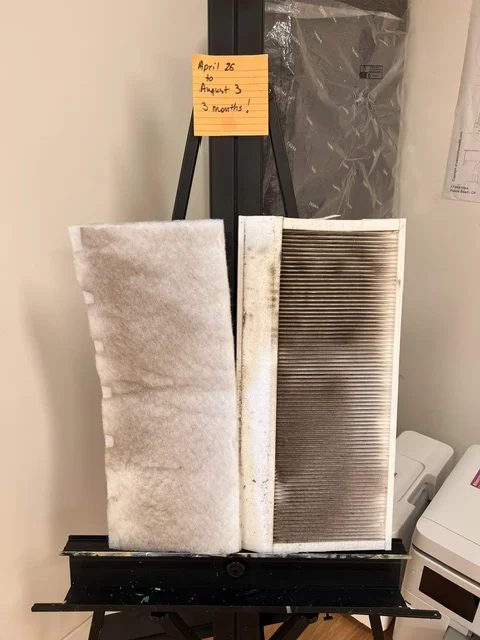
A growing dissatisfaction with the process and outcomes being delivered by baseline codes kept surfacing in comments throughout, and could be categorized as an untracked theme of this conference. A remarkable report comparing PHPP results to California’s Title-24 compliance code model delivered by Rebecca Evans of Frontier Energy underscored why. They revealed a gaping hole in air leakage calibration and HRV recovery efficiency credits in CBECC-Res: California’s energy compliance model. As frequent wildfire smoke events plague the Sunshine State, we hope the California Energy Commission is able to fix this gap quickly. Notably, similar mis-calibration issues have been identified in EnergyPlus, casting doubt on the accuracy of these models for low load buildings.
Informal Education
Outside the formal conference sessions, PHN hosted two popular informal sessions. The first examined opportunities for how to encourage the use of Passive House in commercial buildings, specifically in MA where multifamily buildings are almost universally required to deliver PH certified outcomes. PHN shared a number of excellent case study examples already in place across the U.S., plus commercial examples from our global community. PHN is now actively supporting outreach to the hospitality industry, where the financial pro forma already makes dollars and cents.
The second informal session focused on California, looking at how to integrate PH principles into Title-24, Part 6. PHN was able to highlight our collaboration on AB368 which helped precipitate the Frontier Energy study and has required California to finally take PH seriously. This session attracted a large crowd of regional policymakers and local contractors who PHN had invited to this session.
More S’mores
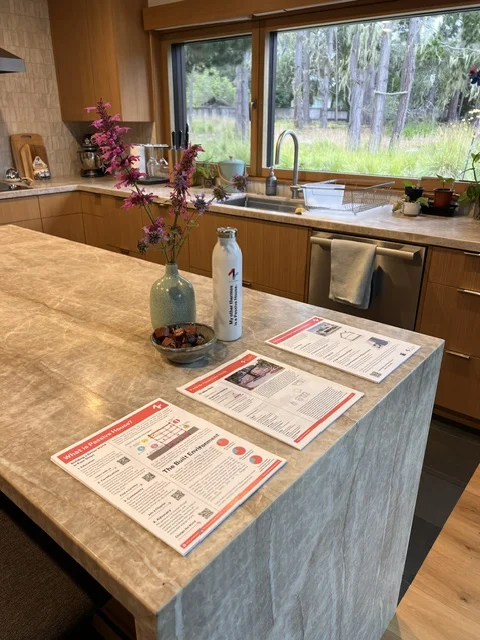
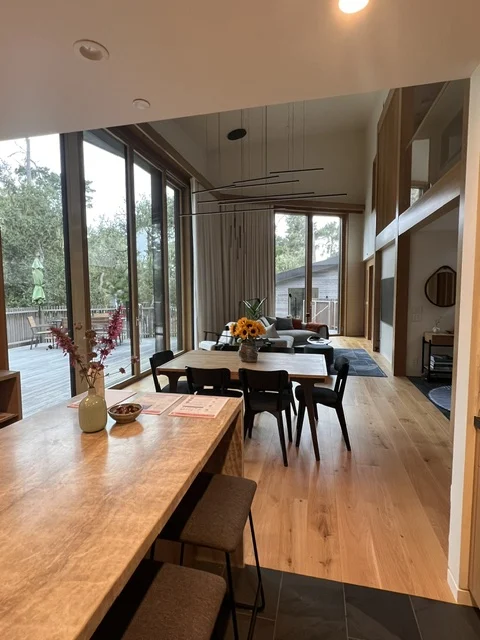
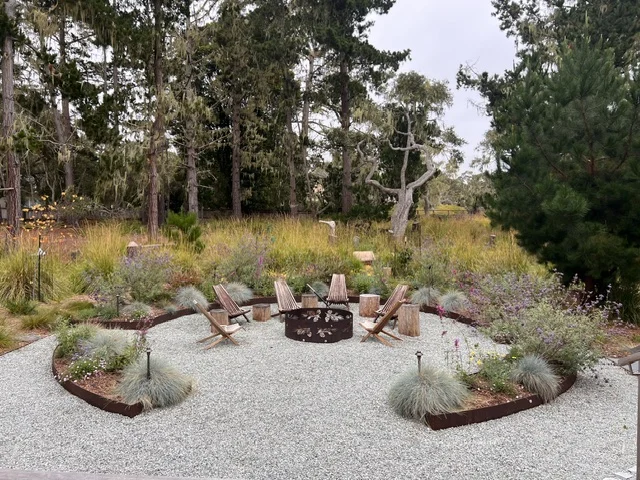
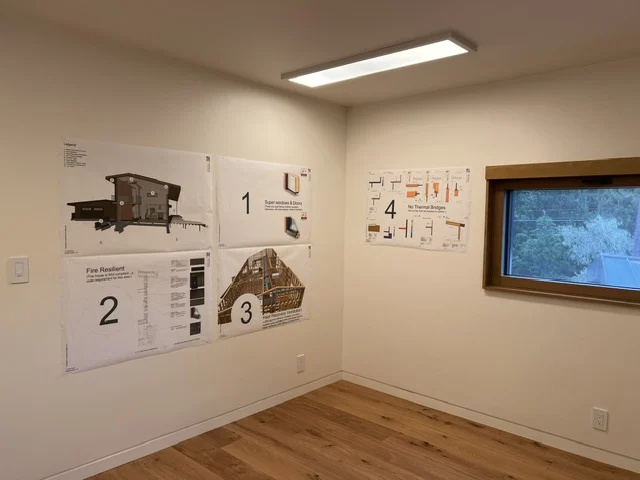
Thanks to the generosity of the Asnis family, PHN was delighted to host a S’mores Social at this conference, opening the outdoor fire-pit and large triple-pane doors of 17Mile Haus to policymakers attending this conference. PHN was able to offer informal tours of this Passive House project, while reconnecting with many friends and allies over hot cocoa and homemade graham crackers and marshmallows. We used the time to encourage more jurisdictions to adopt Passive House alternate compliance pathways and implement more Passive House-specific incentives to scale and accelerate adoption of this resilience standard.
The Path Forward for US Building Policy
By the end of the week, the impact of PHN’s participation was tangible. Over 200 policymakers were able to step inside a PHI certified building to gain a better understanding of the quality and performance capacity these buildings can offer. PHN was able to advocate directly for the removal of barriers to Passive House adoption via the addition of alternate Passive House compliance pathways that are inclusive of both U.S. pathways. We’re excited to continue collaborating with progressive policymaker friends to accelerate local Passive House implantation. We are simultaneously unafraid to advance legislation in places where policymakers continue to delay Passive House adoption.
We can no longer stand idly by now that we know that many code compliance models actively discredit or mask Passive House benefits. There is still work to do until our baseline codes meet or exceed Passive House targets.
Thanks
A very big thank you to the Asnis family for opening their house for our use during this conference. Special thanks to PHN members Matt Hanner and Megan Ring for their volunteer support at our S’mores Social, and to Matt Hanner and Mike Horgan for bringing their contractor perspectives to our informal event around advancing PH in California.
Onwards!